
The Cynocephali or “Dog-Headed” People are among the oldest and most enigmatic and fascinating of all mythological peoples. They were depicted as humanoids with canine features (heads) by ancient Greeks, Romans and Medieval legend. It was said they were distant, warrior like people living beyond the boundaries of the civilized world. Their presence has created an enduring fascination with historians, Mythology buffs, and Fantasy fans alike for thousands of years.
Cynocephali translates directly from ancient Greek where Kynos means “dog”, and Kephale means “head”. Therefore, it can be literally translated into “the dog headed people”. As depicted in these ancient accounts, Cynocephali were strong warrior men, but were also shown to be humanoid with canine head features and atypical customs. There is no credible proof the Cynocephali ever actually existed.
Who Were the Cynocephali?
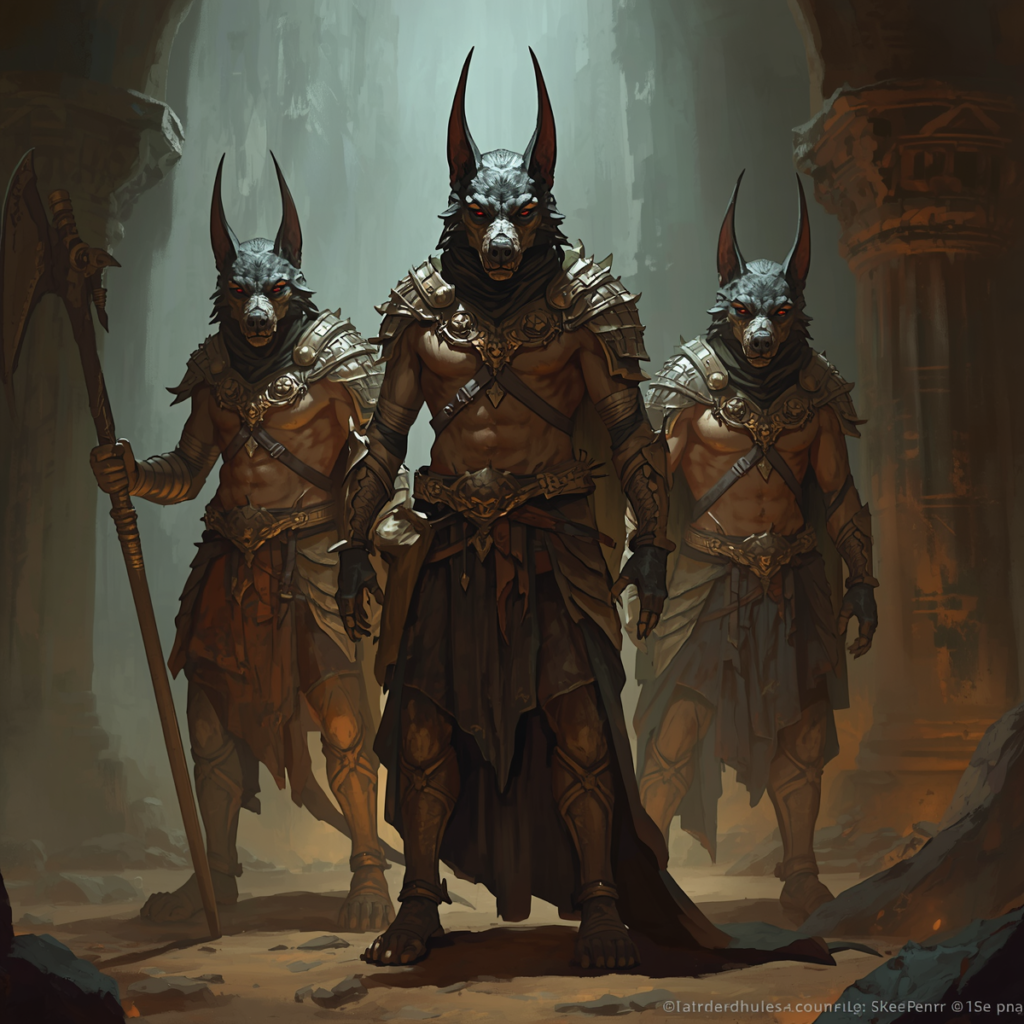
Ancient texts and medieval writings mention Cynocephali as legendary beings: humans with dog heads. According to myth, they lived in remote parts of the world far from Greek and Roman civilizations. Their odd appearance made them symbols for lands that explorers of old had not fully uncovered. Writers frequently told stories of unusual races when describing distant lands. Travel was limited and information about foreign places scarce so many cultures developed myths of strange creatures at world’s fringes. Cynocephali became one of the most famous of these mythological races.
Unlike typical monsters from mythology, Cynocephali were often depicted as intelligent beings. Some stories portray them as fierce warriors but others suggest they have their own societies, languages and traditions too.
Origins of the Cynocephali Legend
Early references to dog headed warriors called Cynocephali first appear in ancient Greek literature. Writers spoke of strange tribes and creatures said to live in distant places such as India and Ethiopia as well as lands that had not yet been explored beyond the world near the Mediterranean. Herodotus recorded stories about unusual peoples and strange creatures in distant lands.
His writings collected from traders, merchants and explorers included many accounts. Some descriptions may have been based on direct observations but others grew exaggerated through storytelling too. Another ancient writer Ctesias also wrote about India and included descriptions of strange beings. Accounts he wrote influenced legends about mysterious races including Cynocephali later.
Ancient societies often conceived unknown lands as places both full of marvels and dangers. Cynocephali personified mysteries that lay beyond the limits of what was known.
Cynocephali: The Dog-Headed Warriors
The Cynocephali are one of the best known groups in mythology for having been both powerful and skilled warriors. Their appearance as “dog headed” likely caused a great deal of intimidation; therefore, it is easy to see how this would be an interesting and frightening subject to include in legend.
Many stories included the Cynocephali as fighting warriors from far off places. This mythological representation of a group of dog headed warriors can represent a people’s fear of the unknown and a fascination with other cultures. In the minds of ancient storytellers, a race of beings that had physical characteristics of animals, yet demonstrated intelligence and communication capabilities was truly unusual.
It is also important to note that all stories did not describe the Cynocephali as brutal and blood thirsty. Many stories depicted them as noble beings which operated according to their own laws and customs. They were able to demonstrate intelligence and communicate through language (not unlike normal man) making them different than wild animals.
Their ability to combine intelligent thinking with an animal-like form makes the Cynocephali one of the most interesting examples in mythology.
Cynocephali in Greek and Roman Mythology
Ancient myths surrounding the Cynocephali spread throughout Greece and Rome via classical writings. Many classical authors wrote about people who lived on the edge of the known world who seemed bizarre.
In his most popular Roman writing, Natural History (a collection of writings that explored nature, geography and the world) Pliny the Elder documented many odd races and creatures.
To ancient civilizations reading about Cynocephali was both an entertaining read but also served as an attempt to comprehend distant regions of the earth and the vastly different cultures found beyond those boundaries.
Cynocephali are part of a long list of mythological races including giants, one eyed beings, etc., all of which reflect human curiosity for what exists beyond our borders.
Did the Cynocephali Really Exist?
There is no documented scientific or historical proof that the “Cynocephali” (dog headed) peoples existed in reality. As for most historians they are mythological beings generated from ancient storytelling.
There have been many speculative theories on what influenced these myths.
Traveler accounts were misinterpreted as possible explanations. When travelers encountered foreign language, customs and/or fashion, they would create larger than life descriptions of those travelers.
Ancient people possibly saw certain wild animals, like primates, as being close enough to human in appearance to confuse as having human characteristics.
It has also been suggested that the Cynocephali were an example of the long established artistic tradition of depicting animal head humans. Many old civilizations depicted gods/ spirits with a human body and the head of an animal. Thus it appears that the concept of man-animal hybrids was well established before this mythology emerged.
Conclusion: The Lasting Mystery of the Cynocephali
The Cynocephali – a group known as “the dog headed men” – is an enduring example of the fascinating nature of myths in history. Regardless of whether these ancient tales came from an actual experience with such individuals, misinterpretations in communication between cultures, or simply the product of imagination, the Cynocephali myth has continued to capture the hearts of humans for generations.
The Cynocephali provide evidence of humanity’s insatiable desire to explore and learn about our world. As ancient humans were both explorers and tellers of stories, the use of myths allowed these early societies to make sense of their world.