
The Iron Maiden Torture Device is one of the most well-known images of the Middle Ages and punishment. It is featured in films, museum exhibits, books and TV shows; therefore, it is commonly shown as an iron cabinet containing sharp points where the victim would be placed to slowly torture them.
Iron Maidens were actually created during the late medieval period. However, surprisingly for many historians, the majority do not believe they were ever actually used during the medieval period.
Rather, many existing examples of iron maidens are believed to have been made much later than when they are believed to have originated.
This article will examine both the history and design of the iron maiden, along with its myths, historical documentation and cultural influence and how to distinguish fact from fiction.
What Is the Iron Maiden Torture Device?
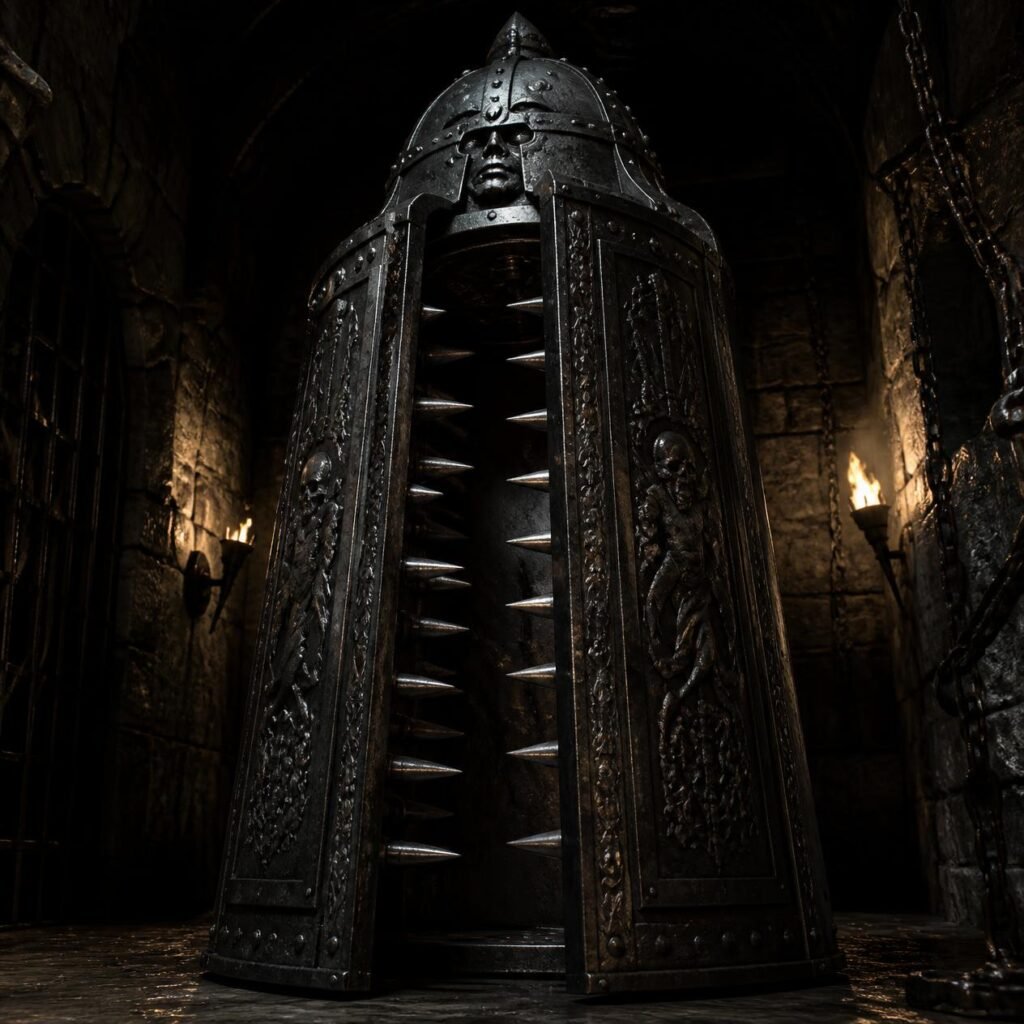
Iron Maiden is an iron chest that resembles a coffin. It was designed to be large enough for a person to stand in, however inside the iron box were many sharp spikes attached to the front of the door, as well as on all sides.
When the two front doors were locked shut into place, they were supposed to be able to cause damage to the body by poking various areas of the victim with these spikes.
However, when the spikes pierced the victims body; there would be no immediate fatal damage to internal organs. Therefore, this device was designed to prolong the suffering of its victim, rather than killing them instantly.
The common depictions include:
- A large, human-shaped iron chest
- Metal spikes lining the inside
- Doors that open from the front
- A locking system
- Decorations which may have been religiously-themed or ominous
This gruesome depiction has earned Iron Maiden a notorious reputation as one of history’s most infamous alleged torture devices.
Was the Iron Maiden Torture Device Really Used in Medieval Times?
This is one of the most well-known questions surrounding the Iron Maiden Torture Device.
Although many associate the iron maiden as a torture tool from the middle ages in Europe;
There has been very little direct contemporary proof that it was used during the middle ages. There is:
- No verified documentation from medieval courts describing its use.
- No verifiable execution documents discussing the device.
- No trusted drawings of the device by artists or other illustrators from the period.
- Only limited archaeological finds related to actual medieval punishment.
A lot of historians think the infamous “iron maiden” was created in either the 18th or 19th centuries to attract visitors to museums for their displays on how cruel medieval people were.
Therefore, the iron maiden can be classified as mostly myth rather than history.
Origins of the Iron Maiden Torture Device
Several explanations have been proposed for why the idea of the “Iron Maiden” is still with us today.
Origins in Older Stories
There are some similarities between early legends (for example, ancient torture chamber designs with spikes on walls) and modern legends of the iron maiden.
However, these older stories are quite different than the typical depiction of an Iron Maiden as we see today.
The Nuremberg Iron Maiden Exhibit
The most widely known and publicized example of an iron maiden comes from the 19th-century German town of Nuremburg. It was said to be from the middle ages;
However later study has shown it may have been built out of pieces of other historical items therefore, its historic accuracy could likely be questioned.
Victorian Fascination with Medieval Horror Stories
During the Victorian time period, people loved hearing stories about the horrors of the Middle Ages.
Many museums, authors and collectors of torture devices would exaggerate how historical executions were carried out in order to draw public attention.
The Iron Maiden has become an iconic representation of supposed brutal punishment in the Middle Ages.
Iron Maiden Design for Punishment
Historical accounts describe the use of the Iron Maiden as follows:
- A prisoner is placed inside
- Heavy iron plates are shut on top of the person.
- Inside spiked metal pierce the prisoner’s arms, shoulders, legs and body.
- In theory vital areas are spared.
- Extreme suffering ensues until death occurs.
Historians today call into question whether such punishment methods were actually used.
Construction of the Iron Maiden Torture Device
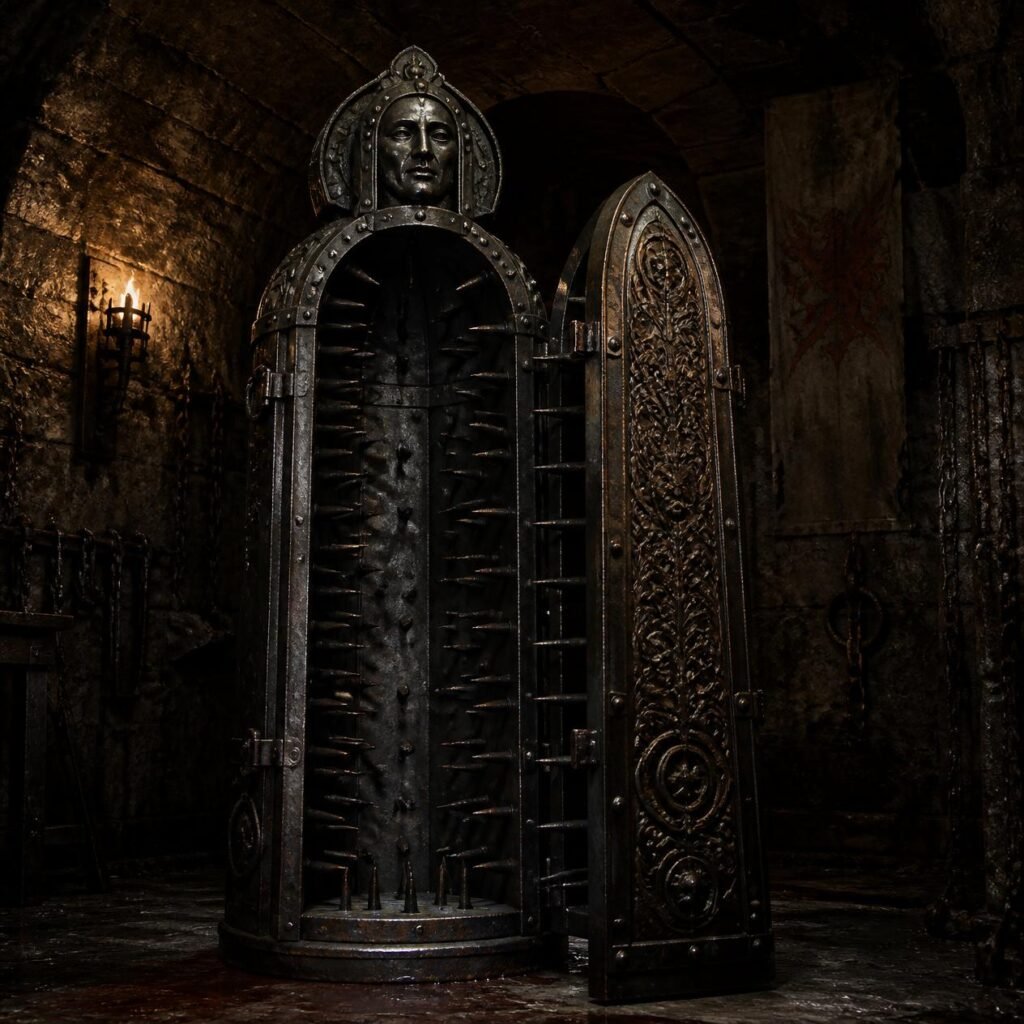
Many museums have built replicas of the torture device called Iron Maiden as follows:
- The frame is made of heavy iron and resembles a coffin in appearance.
- Multiple parts of the body are targeted by spikes with varying lengths on the interior.
- The hinged doors allow for a large front door that will enclose the victim.
- A lock was also used so the victim could not get out after being placed inside.
In addition to an ornate exterior design some replica’s include additional decorative elements such as; faces, statues of saints, skeletons, etc., that can be intimidating and create a greater sense of psychological terror.
Historical Discussion
There are many historians who do not agree with each other fully on this topic.
A number of researchers think there were earlier versions of the Iron Maiden as well; however, it appears they did not leave behind much in the way of proof.
Other researchers are arguing that the majority of what we know about the Iron Maiden today is based largely upon imaginative ideas developed long after its supposed use during the Medieval Period.
Currently, the most common understanding among historians for how this story was formed suggests that the original or first Iron Maiden has little to no support from primary (medieval) historical documents.
Conclusion
The Iron Maiden torture device remains one of history’s most notorious symbols of cruelty but its reputation rests as much on legend as on documented evidence.
It is often depicted as standard medieval torture instrument but historians find little evidence to support that.
Most surviving examples seem to be later creations that have helped to feed public interest in darker corners of history.
Nevertheless, Iron Maiden continues to fascinate audiences because of its striking design and continued presence in movies, books, museums and popular culture.
Understanding the difference between historical evidence and myth allows us to value both the story behind this device and critically examining history.