
The Glaive weapon (pronounced “GLAYV”) is one of the most well-known polearm-type weapons in all of Military History. The combination of the reach that allows for the use of a Spear in conjunction with the cutting ability of a Sword provides Soldiers with an advantage when engaging enemies at Close or Medium Ranges.
Although the Glaive is commonly associated with Medieval Europe, similar type of Polearms have existed in many Cultures throughout History; each were developed based upon local Warfare and Combat Techniques used by those specific Societies/Cultures.
Today, the Glaive is still very much a popular item not just to Historians, Collectors and Martial Arts Enthusiasts but also Fans of Fantasy Games/Movies due to its uniqueness and because of the fact that it is frequently depicted as a Powerful yet Elegant Weapon in Modern Pop Culture.
This comprehensive Guide will cover What a Glaive is, How long has it been around, Design/Style of the Glaive, Uses of the Glaive, Advantages of using the Glaive, Disadvantages of using the Glaive and how does it compare to other Medieval Type Polearms.
What Is a Glaive Weapon?
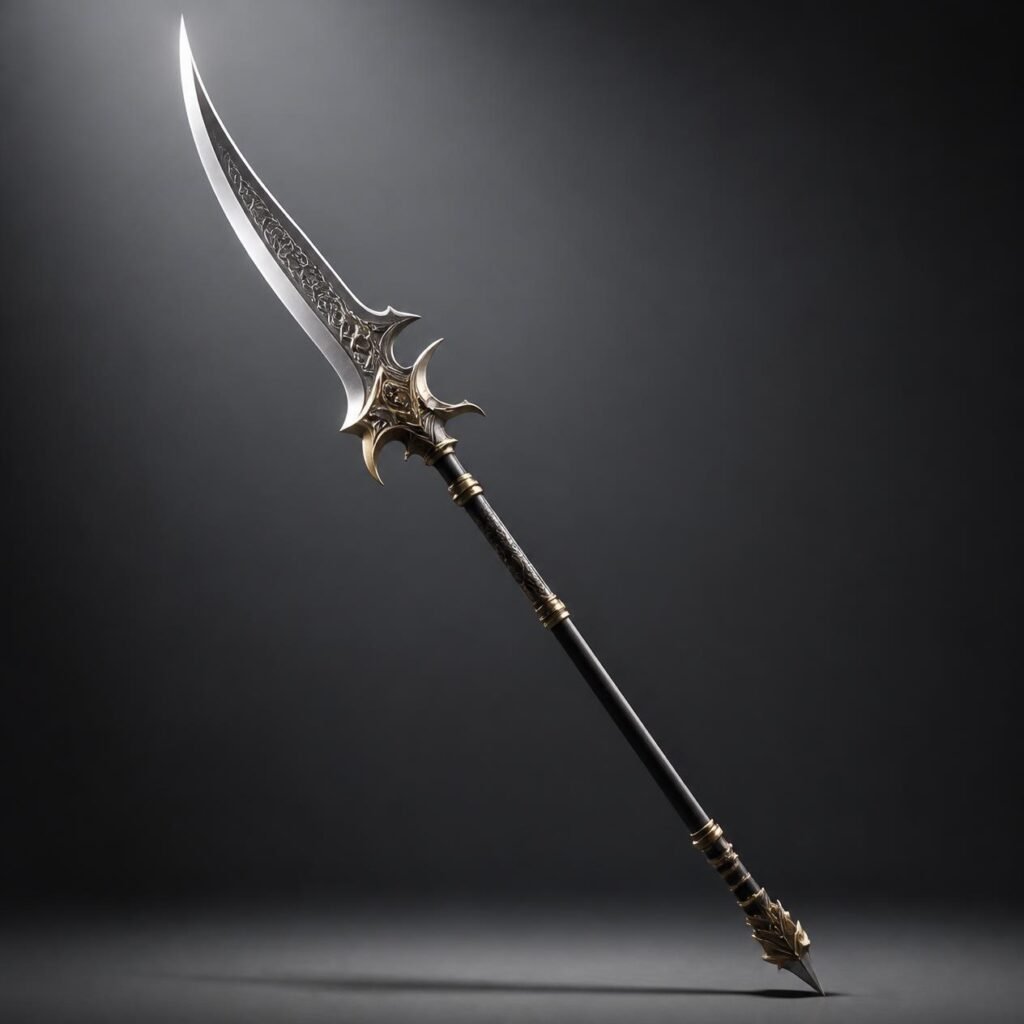
A glaive is a pole weapon. It consists of a long wooden shaft and a blade that is single edged. The blade looks like a big knife or sword and is mounted at an angle that lets you both slash and thrust. Unlike spears which rely mainly on stabbing thrusts, this weapon was designed to slash sweeping motions as well as thrusts precisely. This versatility made it very useful on the battlefield during the Middle Ages.
Key Features
- Long wooden shaft
- Either curved or straight blade
- Blade length usually 18 to 24 inches
- Overall length between 6 to 8 feet
- Requires two hands to use
- Good reach against both infantry and cavalry
Its reach was long allowing soldiers to attack enemies before sword range was reached.
History of the Glaive Weapon
The glaive has been in existence for many years; it was most notably used throughout Medieval Europe, however it had predecessors of this type of polearm that were used in many other areas of the world including Asia.
Ancient History
As early as ancient civilizations, the use of polearms (spear like weapons) were developed. These types of weapons were easier to produce and less expensive than producing swords. Using a wooden pole reduced the need for costly metal to create an effective weapon on the battlefield.
Over time the glaive evolved into other spears with greater cutting ability but still retaining the long reach.
Medieval Europe
During the 14th and 15th century the glaive reached its highest level of usage. Many European armies began equipping their foot soldiers with glaives so that they would be able to defend themselves against mounted knights and enemy soldiers. Foot soldiers equipped with glaives could do the following:
- Attack mounted enemies
- Slice through enemy units
- Maintain a safe distance from the enemy
- Defend narrow passageways
Because of the armor used by cavalrymen during certain periods of warfare in Europe, the glaive proved itself to be very useful in these times.
Design of Gladius Weapon
One reason this gladius weapon remained popular was its practical design.
Shaft Design
- Shafts Most glaives used hardwood shafts made from ash or oak wood.
- These woods provided durability without adding too much weight.
- Typical shaft length: 6 to 7 feet Occasionally shafts grew longer over 8 feet
- Longer shafts increase reach while still allowing good control
Blade Design
Usually it had:
- Single cutting edge
- Sharp point Slight curve
- Wide Blade profile
- Some versions included hooks or points near base to grab shields or pull mounted riders off their horses
Langets
Many glaives featured strips of metal called langets along the shaft.
- These metal strips protected wood parts from being cut during battles.
How Was the Glaive Weapon Used?
Although the weapon used by soldiers (the glaive) offered many different ways to engage in battle, there were still some major disadvantages.
Slashing
When using a glaive as a slashing sword, you can use your long blade to cut down groups of people in close formation because the length of the glaive is longer than most other swords.
Thrusting
Because the end of the glaive has a sharp point, you are able to thrust into an opponent like you would if you were using a spear.
Defensive control
Although a glaive does have both sides that are exposed, One of the best uses for the glaive is creating distance between yourself and your opponent which makes it easier to block their attack.
Hooking
In addition to the features listed above, some glaives also feature hooks at the bottom. This allows the soldier to:
- Pull a rider off of his horse
- Take control of an opponents’ weapons
- Move an opponent’s shield out of position
- Benefits of using the Glaive Weapon
Benefits of using the glaive weapon
Reach
The greatest benefit to using the glaive is that it offers greater range than almost every other type of melee weapon. Because of this, a swordsman will need to come very close to you before he can even attempt an attack.
Versatility
A glaive is versatile. It can be used to:
- Slash
- Thrust
- Block
- Hook
- Create space between yourself and your opponent.
It is rare that any single type of medieval weapon combines all of these abilities.
Affordability
Another benefit of using a glaive instead of a sword is cost. Unlike a sword, a glaive requires much less steel to make. As such, they are cheaper and therefore available for purchase by larger numbers of people.
Effective against knights/other cavalry
Due to the nature of mounted warfare; although knights may be excellent fighters while riding, they tend to struggle when faced with well-trained and disciplined foot soldiers armed with long polearms like the glaive.
Limitations of Glaives
Although the glaive was a powerful weapon it also had some disadvantages.
Not Ideal for Indoor Combat
The length of the glaive was a problem when engaging with other soldiers indoors.
Training Required to Use Properly
When used properly the glaive required coordination, timing and training. If a soldier did not have this training they could very well lose control of the glaive.