
Theodosia Burr Alston was the daughter of former U.S. Vice President Aaron Burr; she is also one of the most intriguing woman of early America. Theodosia received an education that would have been considered superior by many standards at the time.
She had social influence as well as close ties to some of the most contentious figures of her day. Her life however ended—albeit it seems so—in one of Americas longest running and perhaps most mystifying historical enigmas.
On December 31, 1812 Theodosia boarded the schooner Patriot in Georgetown, South Carolina. She was to sail north on this voyage to be reunited with her father in New York. The ship never made it there. Theodosia Burr Alston along with all those who were aboard her vanished into thin air.
Historically speaking, historians are almost universally in agreement that Theodosia Burr Alston met an untimely demise when the Patriot either sank or ran aground due to heavy weather off the treacherous coastline of North Carolina.
Who Was Theodosia Burr Alston?
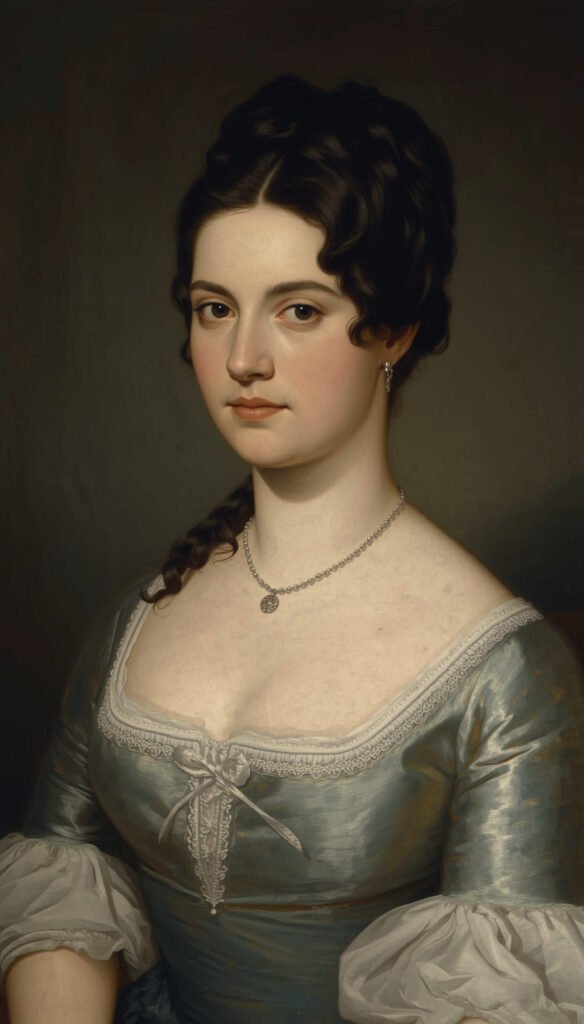
Theodore (or Theodosia) Burr Alston was born on June 21, 1783, in Albany, New York. She was the only living child of Aaron Burr and his wife Theodosia Bartow Prevost.
Aaron Burr would later become the third Vice President of the United States under President Thomas Jefferson. However, Aaron Burr will most likely be remembered for a duel he fought with Alexander Hamilton in 1804. In this duel, Alexander Hamilton was fatally wounded. Additionally, Aaron Burr’s political career continued to suffer from negative publicity when he was charged with treason in 1807 and went to trial. Although he was eventually found innocent, it took him several years to recover in Europe prior to returning to New York in 1812.
Growing up in a home where there was an intellectual ambition for herself, Theodosia had her education emphasized by her father. As such, she studied many topics that were unavailable to women of her era.
As a result, she developed a reputation for being intelligent, educated, charming, and having a very close relationship with her father. These traits are evident through their extensive correspondence and provide a great deal of insight into both her personality as well as her family life.
Theodosia’s Marriage and Family
In 1801, Theodosia married Joseph Alston (a wealthy South Carolina planter), who would become the Governor of South Carolina.
Together they made their home in South Carolina and had one child together, Aaron Burr Alston; he was born in 1802.
Although she was now married, Theodosia maintained a strong relationship with her father throughout his many problems politically. Years spent abroad due to these political issues caused a significant amount of time for her and her father to be apart. While separated, Theodosia maintained communication with and supported her father.
Tragedy also occurred in Theodasia’s family. Her young son died in 1812, reportedly of malaria. This loss had an impact on Theodesia as did the events that followed his death.
Why Did Theodosia Travel on the Patriot?
After returning to America from his voyage aboard the British ship HMS Alexander in 1812, Theodosia Burr (Alston) sought out another meeting with her former beau, Aaron Burr.
However, since her husband, Governor of South Carolina Joseph Alston, would be unable to join her on this trip as he remained behind in Columbia, South Carolina, Theodosia decided to go to New York via the ocean.
On December 31, 1812, she boarded the schooner Patriot at Georgetown, SC for a trip that would ultimately take her to meet up with her father in New York.
That family reunion never took place.
The Disappearance of Theodosia Burr Alston
There is no conclusive evidence to show where the Patriot vanished on the Atlantic coast or what happened to it or its passengers after the disappearance.
In addition to being in an extremely dangerous time (War of 1812) with many hazards associated with traveling by sea (storms, bad weather, blockade, etc.) there are also privateers operating against American shipping.
Cape Hatteras was one of the most treacherous areas along the NC coast. This area would eventually become known as the “Graveyard of the Atlantic” due to the huge number of ships lost off the North Carolina coast.
According to historical records, a very large storm hit the Carolina coastline about Jan. 2, 1813. Today’s researchers feel this may be the probable reason why the Patriot was lost at sea.
What Happened to Theodosia Burr Alston?
The truth is no one knows with absolute certainty what happened to Theodosia burr alston.
It is believed that the Patriot ship sank at sea and all on board including Theodosia died in the disaster.
But Aaron Burr himself reportedly believed his daughter had been lost at sea in a shipwreck rather than captured by pirates or survived under another identity.
And as there was no confirmed wreckage or remains found to prove it was Theodosia on the Patriot, other explanations continued to be developed.
So this uncertainty turned a tragic maritime death into America’s most enduring historical mysteries.
Was Theodosia Captured by Pirates?
One of the most popular and well known theories is that either pirates, or wreckers (the term for those who would lure ships to their doom) destroyed a patriot ship with Theodosia on board.
Coastal piracy and wrecking did occur in some areas of the Atlantic coastline at this time. As stories of her disappearance grew over the course of the 19th Century, so too did the tales surrounding the disappearance. Many of the versions told by later writers include “evidence” such as alleged confessions from alleged perpetrators, eyewitnesses, etc. and stories of people claiming to have seen/encountered Theodosia herself after she disappeared.
There has never been any credible evidence that Theodosia was ever held captive by pirates.
The Mysterious “Female Stranger”
Some people believe Theodosia may be connected to a female whose identity has never been identified as a “Female Stranger,” and died in 1816 in Alexandria, Va.
This unidentified female stranger is buried at St. Paul’s Cemetery with a marker which states only “A Female Stranger”. Due to the mystery involved in her demise many late storytellers speculated she could possibly have been Theodosia Burr Alston.
While this is a compelling story there are still many unanswered questions. There is absolutely no proof that the Female Stranger was actually Theodosia.
There are major time constraints to prove that Theodosia was alive when she disappeared on the Patriot; therefore, there is strong doubt that she remained alive long enough to arrive in the United States under another name.
What About the Nag’s Head Portrait?
Another very well-known aspect of the mystery also includes another famous painting known today as the “Nag’s Head Portrait”.
Decades after Theodosia had vanished from the scene, a woman’s portrait was said to have been located in the Nag’s Head section of North Carolina. Many were said to believe that she resembled Theodosia; this would add to the mystery of her disappearance.
Eventually, the portrait has become a significant portion of the entire legend surrounding her disappearance. However, because similarity does not equate with proof of identity, there is no concrete proof that the woman being painted in the picture is indeed Theodosia Burr Alston.
Why Did the Mystery Become So Famous?
The loss of Theodosia Burr Alston sparked public interest to some extent due to whom she was.
As an ordinary passenger would be out of character for this voyage, Theodosia was the daughter of Aaron Burr, perhaps one of America’s most divisive politicians. Her background and associations combined with her educational pursuits and relationship with her father made her disappearance a sensational story.
Her disappearance is also the kind that provided future generations the opportunity to create various possible endings. A shipwreck could provide a tragic yet somewhat straightforward answer as to what happened to her. However, pirate tales, mysterious portraits, unidentifiable burial sites and survival accounts have created a very much larger than life tale.
Ultimately, these various stories evolved into American folklore.
Most Likely Explanation
Although we can never know exactly how Theodosia Burr Alston met her demise, based on the facts of the time in which she sailed aboard The Patriot, it is still highly probable that she perished as the result of a wrecked vessel.
In addition to being in an area known historically as one of the most treacherous coastlines in America at a time when there was war going on with Britain, The Patriot’s route would have placed them in a serious storm shortly after they had vanished. Additionally, Cape Hatteras has long been infamous among mariners for its extremely hazardous maritime environment.
Additionally, despite the numerous theories that exist today regarding what may have happened to Theodosia (such as whether pirates possibly took her from the ship), I am aware of absolutely nothing in history to prove that she did survive her journey aboard The Patriot.